
 Roulette brings elegant suspense to gaming floors across the South and Midwest. The spinning wheel and bouncing ball create drama at casinos and resorts from the Gulf Coast to Indiana, blending European sophistication with American flair.
Mathematician Blaise Pascal is credited with the wheel’s origins. In 1655, while attempting a perpetual motion machine during a monastic retreat, he created a spinning device that became roulette’s foundation. The name means “little wheel” in French. Early versions mixed Italian Biribi and other wheel games.
By the late 1700s, Paris casinos featured wheels with single and double zeros. In 1842, brothers François and Louis Blanc designed the single-zero wheel for Monte Carlo to offer better odds (house edge ~2.7%) and attract high rollers. American casinos retained the double-zero version (house edge 5.26%), preserving the classic layout.
Some legends claim Dominican monks brought a Chinese “magic square” game with animal statues to Europe, but Pascal’s accidental invention is the most accepted. A colorful tale says the Blanc brothers sold their souls to the devil for the secrets—explaining why numbers 1–36 sum to 666.
Roulette reached America in the early 1800s. It appeared on riverboats and in New Orleans halls. When 1990s riverboat gambling revived in Mississippi, Illinois, Indiana, and Missouri, roulette wheels spun alongside blackjack and craps.
The wheel has 38 pockets in American roulette (1–36, 0, 00) or 37 in European (single 0). Bets include straight-up numbers, reds/blacks, odds/evens, dozens, and columns. Inside bets pay higher but carry more risk; outside bets offer better odds.
Fun facts highlight its allure and interesting origin. The single-zero innovation halved the house edge in Europe. Roulette symbolized chance in literature and film. Early American wheels sometimes included an eagle pocket for extra house advantage.
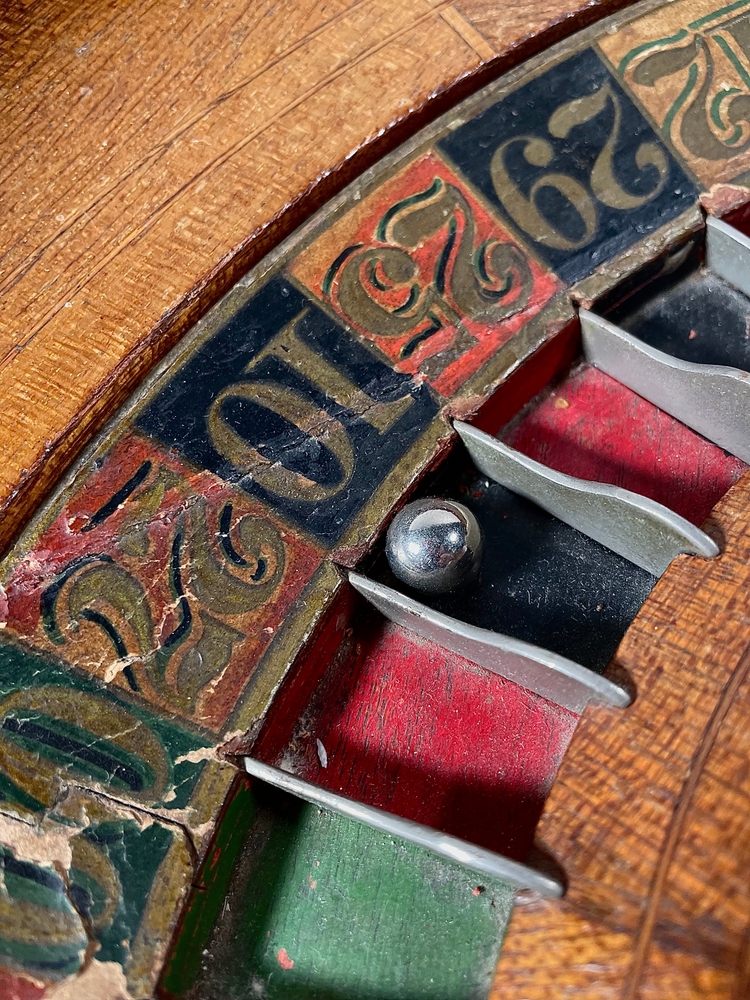
In Southern and Midwest casinos, roulette appeals to both novices and strategists. Systems like Martingale or D’Alembert add intrigue, though the house edge remains. The game’s pace suits relaxed play and its history reflects gambling’s evolution—from French salons to Monte Carlo glamour to American casinos. It survived bans and moral panics because of its visual appeal and straightforward rules.
Today, electronic and rapid roulette variations speed up play, while classic tables maintain tradition.
Whether betting on black or chasing a straight-up hit, the ball’s dance delivers pure anticipation.
Roulette endures because it balances luck with betting creativity. In an industry dominated by slots, the wheel offers a timeless ritual. So, the next time you watch the ball settle, remember Pascal’s failed experiment that accidentally created casino magic—still spinning strong on Southern and Midwest floors.