
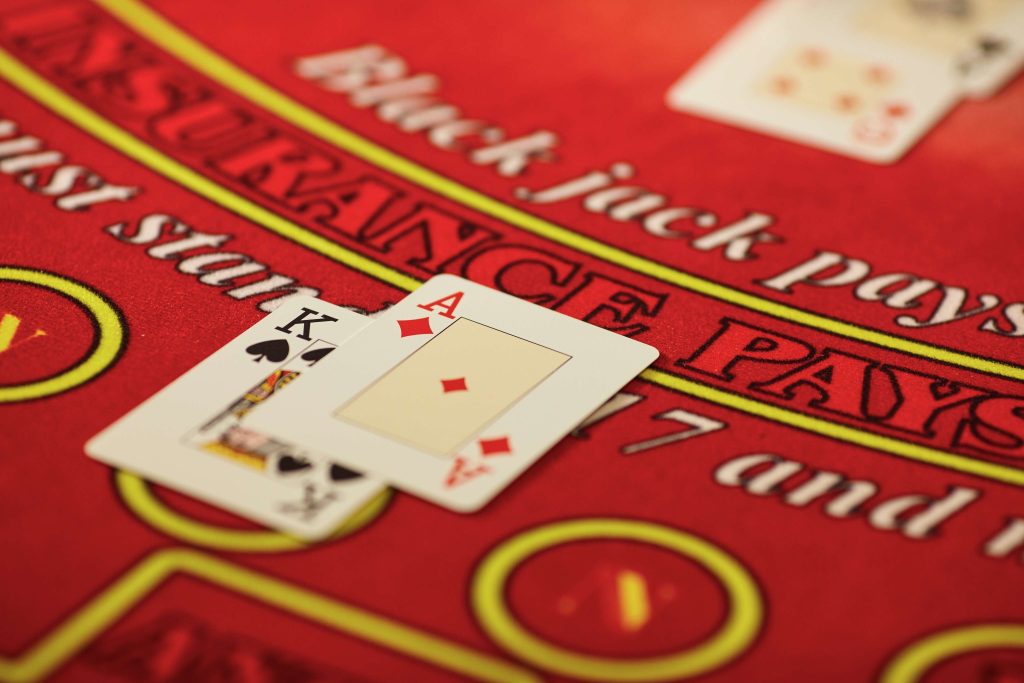
 Blackjack has held its crown as the most popular casino table game for decades, and it’s easy to see why. Few games combine skill, pacing, and suspense quite like it. Every hand offers a decision—hit, stand, split, double—and every decision carries weight. Add in the dealer’s unknown hole card, and you’ve got a steady stream of tension that keeps players locked in.
For many, that’s more than enough. But for others, the grind of even-money wins and incremental bankroll swings doesn’t quite scratch the itch. They’re looking for something sharper, faster—a chance to turn a routine hand into a headline moment. That’s where blackjack side bets come in.
Side bets are optional wagers placed alongside your main blackjack bet. They don’t change how the base game plays, but they do offer a shot at outsized payouts—sometimes 10-to-1, 25-to-1, or even five figures on a single hit. The tradeoff? A higher house edge. While a solid basic-strategy player might face a house edge under 1% in blackjack (and often around 2%–2.5% for the average recreational player), most side bets range from 3% to well over 20%.
That gap is the price of admission for volatility—and for many players, it’s worth it.
Why Side Bets Stick Around
Casinos love side bets because they increase theoretical win without slowing the game. Players love them because they inject excitement and variety. The result is a constant cycle of innovation. New bets appear, surge in popularity, and sometimes fade—only to reemerge years later.
One example is Royal Match, a staple of the 1990s that’s enjoying a resurgence thanks in part to electronic table platforms. Meanwhile, games like 21 + 3 have shown remarkable staying power, becoming near-standard features on many blackjack floors.
Most tables offer just one side bet at a time, though the specific option varies by property. And importantly, you’re never obligated to play them. Many seasoned players ignore side bets entirely, while others sprinkle them in selectively.
Let’s break down some of the most common—and most interesting—blackjack side bets on the felt today.
21 + 3: The Gold Standard
If blackjack side bets had a flagship, this would be it. Invented by Derek Webb (the mind behind Three Card Poker), 21 + 3 blends blackjack with poker logic.
Your first two cards plus the dealer’s upcard form a three-card poker hand. If that hand is a flush, straight, three of a kind, or straight flush, you win—typically at 9-to-1 on a standard pay table.
Statistically, you’ll hit a winning combination about once every 10.3 hands in a six-deck game. Flushes make up the bulk of those wins, as they’re more common than straights or trips in a three-card format. The house edge sits around 3.2%, making it one of the more player-friendly side bets available.
That relatively modest edge explains its durability. Compared to the base game, you’re giving up a bit more ground—but not dramatically more, especially for casual players. It’s also social: at busy tables, you’ll often see multiple players in on the bet, creating shared excitement when a straight flush lands.
Royal Match: Old School, New Life
Royal Match is simple, elegant, and surprisingly sticky.
You win if your first two cards are suited, typically paying 2.5-to-1. But the real prize is a “royal match”—a King and Queen of the same suit—which can pay 25-to-1 or more depending on the table.
Here’s where it gets interesting: the math improves with more decks. In a six-deck game, the house edge is about 6.7%. In single-deck, it jumps to around 10.9% because suited combinations are less frequent.
You’ll hit some kind of suited hand nearly 24–25% of the time in multi-deck games, so there’s a steady drip of small wins while you wait for the big one. The royal match itself is rare—roughly once every 330–336 hands—but that’s the nature of the beast.
Some alternative pay tables tweak the payouts to reduce volatility, but those versions are less common in live casinos.
Perfect Pairs: Matching Up
Perfect Pairs focuses on just your first two cards. If they match in rank, you win—but how they match determines the payout.
A typical pay table looks like this:
- Perfect pair (same rank and suit): 25-to-1
- Colored pair (same rank, same color): 12-to-1
- Mixed pair (same rank, different color): 6-to-1
In a six-deck game, the house edge is around 6.1%, dropping slightly in eight-deck shoes. The bet is straightforward and easy to understand, which makes it popular with newer players.
One limitation: it can’t exist in single-deck blackjack. With only one card of each rank and suit, a “perfect pair” is impossible.
Lucky Ladies & Bonanza-Style Bets: The Power of 20
Many side bets revolve around totals of 20, and for good reason—it’s one of the strongest hands in blackjack, yet often results in pushes.
Bonanza-style bets flip that frustration into opportunity. If you’re dealt a 20 and the dealer shows a 10, you’re in business. Payouts vary widely based on card composition, from modest returns for unsuited 20s up to massive jackpots (sometimes $25,000 for a $1 bet) for ultra-rare combinations like matching suited pairs against the dealer.
The catch? A steep house edge—often around 18% or higher. These are pure jackpot plays, designed for players who are willing to trade long-term value for a shot at a life-changing hit.
Dealer Busts on Ace: Situational Strategy
This side bet only activates when the dealer shows an Ace. You’re betting that the dealer will ultimately bust.
Because it’s conditional, it feels more strategic than most side bets. And the math can be relatively reasonable:
- If the dealer hits soft 17: pays 6-to-1, house edge ~2.6%
- If the dealer stands on all 17s: pays 7-to-1, house edge jumps to ~7.6%
That variability makes this one worth a closer look depending on house rules. In favorable conditions, it’s one of the rare side bets that approaches the base game’s odds.
Jackpot Blackjack: Swinging for the Fences
Progressive side bets bring slot-style jackpots to the blackjack table. Jackpot Blackjack pays based on blackjacks—yours, the dealer’s, or both.
Small wins are common: a basic blackjack might pay 3-to-1, with higher payouts for suited or matching combinations. But the real draw is the progressive jackpot, often triggered by extremely rare outcomes like both player and dealer holding suited Ace-Jack in spades.
At a baseline jackpot (around $10,000), the house edge can exceed 23%. As the jackpot grows, that edge shrinks—sometimes significantly. This dynamic mirrors other progressive table games like Caribbean Stud Poker.
Still, make no mistake: this is a long-shot play. You’re paying for the dream.
Over/Under 13: Simple, but Be Careful
This bet is as straightforward as it sounds. You wager whether your first two cards will total over or under 13. If it’s exactly 13, the house wins.
Despite its simplicity, the math isn’t great:
- Over 13: house edge ~6.5%
- Under 13: house edge just over 10%
Card counters once exploited this bet by playing it selectively, but casinos have since tightened the rules—often requiring a blackjack wager and limiting side bet sizes.
Second Chance Blackjack: A Safety Net
This creative twist gives you a fallback if your hand busts. The card that busts you, combined with four additional cards, forms a five-card poker hand. If that hand qualifies, you get paid according to a poker-style pay table.
With a house edge around 5.28%, it sits in the middle of the side bet spectrum. It’s not widely available, but it adds a fun psychological cushion—turning a losing hand into a potential comeback.
The Bottom Line: Know What You’re Buying
Blackjack side bets aren’t about grinding out profit—they’re about adding spikes of excitement to a steady game. The numbers make that clear. Even the best side bets carry a higher house edge than the base game, and many are significantly worse.
But that doesn’t mean they’re “bad.” It just means you should treat them for what they are: entertainment with a price tag.
If you’re playing to maximize your odds, stick to basic strategy and skip the extras. If you’re playing for fun and don’t mind the cost, side bets can deliver some unforgettable moments—the kind you’ll be talking about long after you leave the table.
Because sometimes, it’s not about the grind. It’s about the pop.