 Blackjack stands as one of the most strategic and enduring casino games in the casino. Players around the world still chase that perfect 21 with the same thrill that has captivated gamblers for centuries.
The game’s roots stretch back to 17th-century Europe. Spanish writer Miguel de Cervantes referenced a similar game called “veintiuno” (twenty-one) in his 1601–1602 novella Rinconete y Cortadillo. In the story, characters cheat at a game where the goal is to reach 21 without busting, with the ace counting as 1 or 11. This early version used Spanish decks that sometimes lacked tens, influencing later rules.
By the 1700s, the French embraced “Vingt-et-Un” (Twenty-One), a popular banking game in Parisian salons and at the court of King Louis XV. It likely evolved from earlier European games like Chemin de Fer and possibly Spanish “Trente-un” (Thirty-One) or Italian precursors. French colonists carried variations to New Orleans in the early 1800s, where gambling thrived in legalized halls. The game appeared in the United States by the early 19th century, with the first American rules published in 1825 as a reprint of 1800 English instructions.
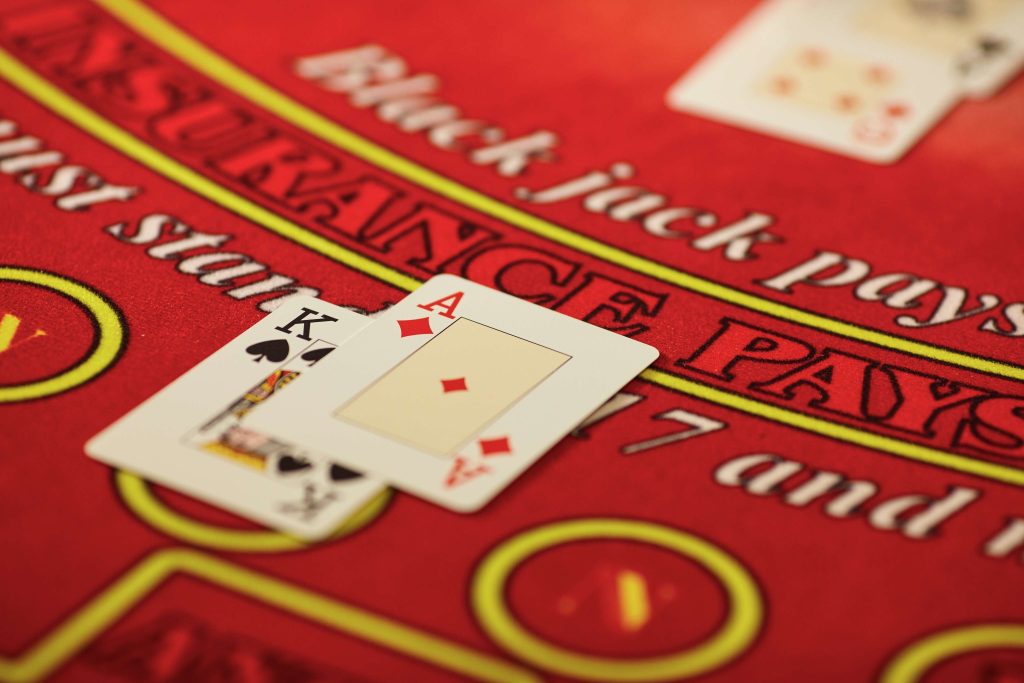
The name “Blackjack” emerged in America during the early 20th century. Casinos promoted a special 10-to-1 bonus for a hand consisting of an Ace and a black Jack (spades or clubs). Even after the bonus disappeared, the catchy name stuck. Some accounts link the term to gold rush mining towns, where “blackjack” also referred to a valuable mineral, adding local flavor to the hand.
Blackjack faced ups and downs. It was banned in France during the Revolution and briefly outlawed in parts of the U.S. in the 19th century. It roared back in the 1930s, especially after Nevada legalized gambling in 1931. The game’s mathematical appeal drew serious players, and basic strategy charts later helped reduce the house edge.
When states like Mississippi, Louisiana, Illinois, Indiana, and Missouri revived riverboat gambling in the 1990s, blackjack tables became staples. The Alton Belle in Illinois launched in 1991 with table games, and similar vessels in Biloxi, Tunica, and along the Ohio River offered the game to locals and tourists seeking old-school casino action with modern comforts.
One legendary figure was Eleanor Dumont, a French immigrant known as “Madame Mustache.” In the 1850s, she dealt Vingt-et-Un in California mining towns, drawing crowds with her skill and free champagne. Her story highlights how women dealers helped popularize the game in frontier America.
Fun facts abound. Some unverified tales suggest Roman soldiers played a version using numbered wooden blocks instead of cards. Napoleon reportedly enjoyed Twenty-One during his exile. The game has been banned multiple times yet always returned stronger. Today, variations like Spanish 21 or multi-deck shoes keep it fresh, while card-counting legends (though casinos counter with multiple decks) add mystique.
Today, blackjack offers that perfect blend of skill and luck. Basic strategy can lower the house edge to under 1%, making it more player-friendly than many games. Side bets like Perfect Pairs or 21+3 add excitement for players.
The game’s enduring popularity stems from its accessibility. Newcomers learn quickly, while veterans appreciate the decisions on hitting, standing, splitting, or doubling. Next time you sit down for a hand, remember you’re part of a story spanning continents and centuries—one that began with Spanish storytellers and French courtiers and found its American soul on the Mississippi.
The game continues to thrive because it rewards smart play without eliminating luck. In an era of high-tech slots, the simple deck of cards still delivers timeless tension. For regional players, it’s more than a game—it’s a link to the riverboat era that helped revive struggling river towns in the 1990s. The cards shuffle, the dealer calls “hit or stand,” and the chase for 21 rolls on.