

I literally bet on hundreds of horse races annually and yet, even if my very life depended on it, I wouldn’t be able to tell you the names of five equines who padded my bankroll last year. Conversely, I can rattle off the moniker of every horse who has won the Kentucky Derby since 1997 (29 horses) in well under a minute. That’s because no matter what anyone tells you, the “Run for the Roses” is worth far more than every other horse race run on planet Earth combined and thus, a true turf zealot remembers each Derby’s particular nuances with resounding clarity.
Donning the guise of “Captain Obvious” here for a second, I’d like to correspondingly state that, “It’s extremely difficult to pick the winner of the Kentucky Derby.” We’re talking about a 20-horse field and frankly, year in and year out, you can make a decent case for just about every entrant. Moreover, given the enormity of the field, it is extremely difficult to secure a “good trip” in the “Run for the Roses” and thus, the best horse typically doesn’t take home the “Golden Jubilee Cup” (Kentucky Derby Trophy). (Not that I’m particularly proud of my .172 Kentucky Derby batting average, but for the record, yours truly has picked the winner of the Kentucky Derby on five separate occasions: Silver Charm 1997, Real Quiet 1998, Monarchos 2001, Street Sense 2007 and American Pharoah 2015.)
Now if you think it’s difficult to select the winner of the Kentucky Derby out of the 20 entries listed in the Daily Racing Form, think of the odds against being the literal horse who will parade into Churchill Downs’ specially reserved Kentucky Derby Winners’ Enclosure on May 2nd, 2026. Can you say astronomical? Alas, we’re getting ahead of ourselves because honestly, just qualifying for the Kentucky Derby is an extraordinarily rare feat in and of itself. Don’t believe me? Well, let’s look at the fact that approximately 18,500 foals were registered with the Jockey Club (thoroughbred horse racing’s governing body) in 2023. Uh and again, only 20 of these will qualify for this year’s Kentucky Derby. Now, you do the math.
Interestingly enough, the Jockey Club requires that every single thoroughbred be bred under what the breeding industry calls “live cover”. This basically means that there is no such thing as artificial insemination inside the “Sport of Kings”. (Apparently, horses recognize, “Ain’t nothing like the real thing baby!”) The reason? Among many other things, requiring “live cover” prevents a few superior bloodlines from being inserted into every mare under the sun.
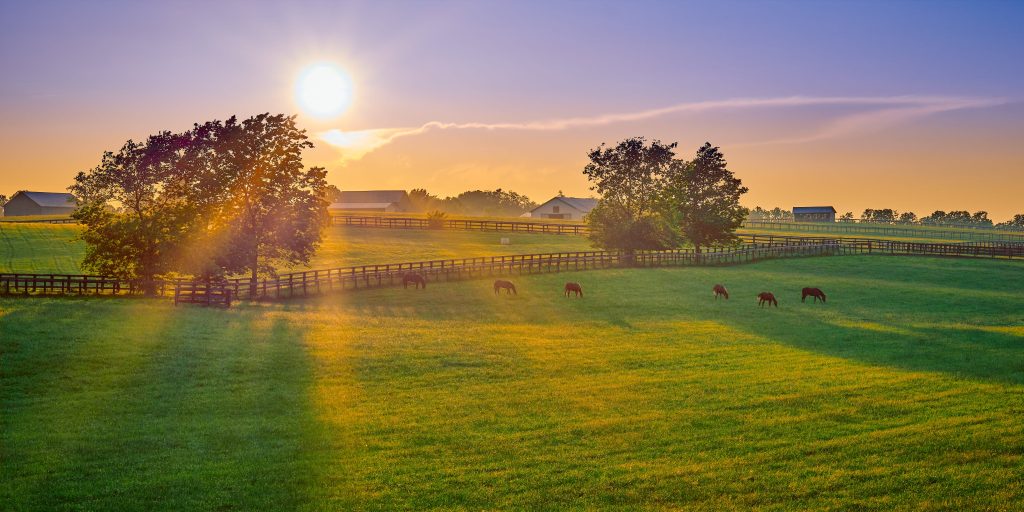
99% of foals are born in the first half of the year. Photo courtesy of Shutterstock
Before we continue, I should relay that 99% of foals are born in the first half of the year. This timing is crucial because every thoroughbred (for racing calendar reasons) shares January 1st as a common birthday. See, if a foal was born on say, November 1st, 2025, they would still technically become a two-year-old on Jan 1st, 2027 (despite having only been alive for fourteen months). Hence, our theoretical “late foal” would be at a severe developmental disadvantage competing against other juvenile (two-year-old) racers. (Oh, and in case you are wondering, the typical gestation period for a thoroughbred mare is around 11 months.)
The sight of a thoroughbred foal being born is truly awe inspiring. Probably the most fascinating aspect of this happening is the fact that most foals pretty much “hit the ground running”. Meaning, they typically are standing and might even walk a few steps within 20 minutes of being born. Thereupon, the first six months of a foal’s life is referred to as the “golden age” where maternal care takes center stage.
Though resolved on a “case by case” basis, foals are typically “weaned” from their mother right around the 6-month mark. While a “weanling” (a less than one-year-old horse that’s been separated from its mother) is still way too young for intensive training, many are nevertheless sold at auction. The thinking here is that a buyer can get a higher quality animal for better value (despite the additional months of care that’ll be required ahead of loading said equine into the starting gate).
Yearlings, as the name suggests, are horses that have reached their 1st birthday. (Again, for racing calendar reasons, all thoroughbreds share the common birthday of January 1st .) Predictably, this is the stage where horses grow the most, not just physically but also mentally. Truth be told, the average yearling accumulates around 70% of their body mass by the time their second birthday rolls around. Furthermore, limbs now noticeably lengthen in preparation of the demands that come with being a top tier thoroughbred racer.
Having been a partial owner of two thoroughbred yearlings, I can emphatically say that, if you don’t have the patience of Job, go find another hobby. See, any thoroughbred conditioner (and owner for that matter) worth their salt knows that there is only one way to train an equine aspirant, i.e. slow and deliberate. First, a solid foundation is laid via measured walking and trotting, both of which procure cardiovascular development and skeletal strength. The payoff here is that the more solid the foundation, the less risk there is of incurring an injury.
While the casual onlooker might suppose that equines get into racing shape simply by sprinting around a dirt oval, nothing could be farther from the truth. In reality, the necessary speed and stamina required to be a Kentucky Derby contender can only be forged by way of a diversified (and often unconventional) training methodology. This translates into swimming in Olympic style pools, galloping across surfaces that vary in elasticity and even leaping over literal hurdles.
In my humble opinion though, learning how to enter, safely indwell and break from the starting gate remains the most overlooked yet crucial part of any equine’s training. The start or “break” is the most dangerous part of any horse race (mostly due to horses getting fractious when they are confined) and thus there is countless repetition regarding the aforementioned progression. Since they are the ones that remain particularly vulnerable at the “break”, the racetrack’s Gate Crew especially appreciate those trainers who turn out gate savvy runners.
For the most part, Kentucky Derby hopefuls start competing as juveniles but with that said, the exact process of punching a ticket to Louisville continues to evolve. Back in the day (before 2011), horses qualified for the “Run for the Roses” based on who procured the most earnings in Graded Stakes races. However, since 2012, a “Road to the Kentucky Derby” point system has been in effect.
The ”Road to the Kentucky Derby” point system is pretty basic in nature whereas it awards points to the top four finishers of select Kentucky Derby prep races. For the upcoming 152nd Kentucky Derby, a total of 36 races were assigned Kentucky Derby points: 21 races for two-year olds and 15 races for three-year olds. While the majority of Kentucky Derby prep races unfold here in the United States, six other countries will ultimately host such contests ahead of this year’s “Most Exciting Two-Minutes in Sports” (Ireland, England, France, Japan, Dubai and Saudi Arabia).
It’s always difficult to predict how many points it will take to qualify for the Kentucky Derby. It seems more qualifying races are added each year and as a result, the average “cutoff number” has recently ballooned. For example, Brooklyn Strong qualified for the 2021 “Run for the Roses” with a paltry 10 points however since then, the average “cutoff number” has nearly quadrupled. (In 2023, Cyclone Mischief needed a record 45 points to qualify for the Derby.) Finally, as a general rule, United States based prep races for three-year-olds offer the most Kentucky Derby qualifying points. A good illustration of this is April 4th’s Santa Anita Derby; a route which will confer 100 Kentucky Derby qualifying points (50-25-15-10).
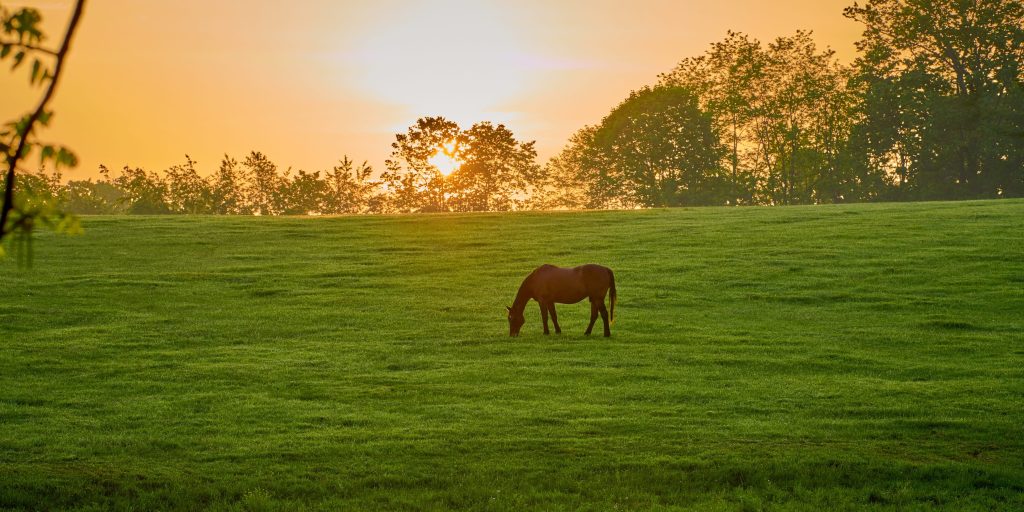
Since I’m sentimental at heart, I’d like to digress for a minute because it’s worth noting that there are an untold number of staunchly dedicated horse people who can only dream about saddling a starter at Churchill Downs on the first Saturday in May. In layman’s terms, what I’m saying is, there are countless folks who break their back 16 hours a day mucking stalls, dishing out feed, applying bandages, giving baths and maintaining training equipment who will never get within 100 miles of the Twin Spires. In this respect, (probably more than any other industry) horse racing is grossly unfair.
All this buildup brings us to the big moment. Our once weanling, yearling and juvenile equine is now being loaded into the starting gate for the Kentucky Derby. They have literally “run through the raindrops” with regard to intense training, dodging injury and accumulating enough qualifying points against the world’s best to now flaunt their stuff in front of over 100,000 delirious fanatics who won’t have a voice for the next two weeks. Then in the blink of an eye the Head Starter springs the starting gate as Larry Collmus (NBC’s Kentucky Derby announcer) bellows, “They’re off!!”
For the next two minutes and 1 ¼ miles, it’s all up to fate (or at least that is what I’ve recently come to believe). Reason being, we have gotten some real headscratchers thus far this decade as far as Kentucky Derby Champions are concerned (Mystik Dan at 18-1 in 2024, Mage at 15-1 in 2023, Rich Strike at 80-1 in 2022 and Medina Spirit (later disqualified) at 12-1 in 2021).
Conjointly, in the same time span, some real good, and I mean real good horses just couldn’t figure out how to snatch the “Sport of Kings’” ultimate brass ring (Sierra Leone in 2024, Forte in 2023 (scratched morning of race), Epicenter in 2022 and Essential Quality in 2021). This just goes to show that if you ever become affiliated with a Kentucky Derby Champion either as a horse person or even a bettor, then you have truly rode the rainbow to thoroughbred horse racing’s proverbial pot of gold!
By Eric Floyd
CLICK HERE to check out more horseracing articles tips and strategies.