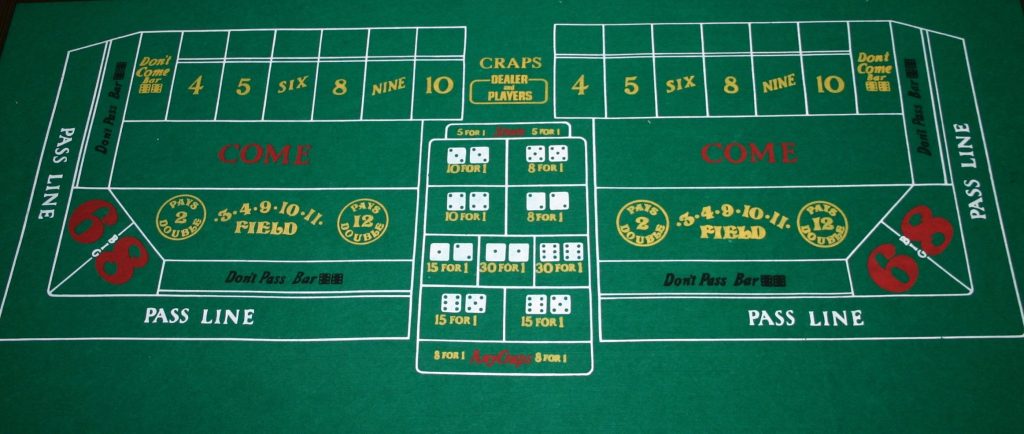

Craps delivers raw excitement on Southern and Midwest casino floors. The clatter of dice and cheers from the rail draw crowds from Biloxi to Michigan, where the game echoes its medieval and frontier roots. Craps evolved from the English game Hazard, which dates to at least the 12th–14th centuries, possibly during the Crusades.
Legend credits English knights, perhaps led by Sir William of Tyre, with creating Hazard while besieging the Syrian castle “Hazarth.” They gambled to pass the time, and the name may derive from that siege or the Arabic “al-zahr” (dice).
Hazard was complex, with players choosing a “main” number and betting on rolls. French players called losing rolls of 2 or 3 “crabs,” leading to the term “craps.” Another theory ties “craps” to “crapaud” (French for toad), describing players crouched like frogs on sidewalks for street versions.
French settlers brought a simplified Hazard to New Orleans in the early 1800s. African American and Creole communities helped adapt it, turning it into a more democratic street game. By the late 19th century, dice maker John H. Winn standardized the modern casino layout in the 1910s–1920s. He added the “Don’t Pass” line to balance the house edge and make craps viable for casinos.
In the South and Midwest, craps thrived informally before legalization. Riverboat gambling in the 19th century featured dice games, and the 1990s revival brought formal tables to vessels in Mississippi, Louisiana, Illinois, Missouri, and Indiana. Casinos like those in Tunica or near offer 10x odds, amplifying the action that made craps legendary.
Roman soldiers may have played an early dice game using pig knuckle bones tossed on shields—origin of “rolling the bones.” Hazard appeared in literature like Geoffrey Chaucer’s The Canterbury Tales. Street craps remained popular in urban areas, played on blankets or sidewalks.
A standout fun fact is Stanley Fujitake’s 1989 “Golden Arm” record: 118 rolls without sevening out at a Las Vegas casino. The feat lasted over four hours and still inspires shooters today. Another tale claims Benny Binion set up early craps games using crate tables during the Texas Centennial.
Craps offers multiple bets: Pass Line (with odds), Come, Don’t Pass, Field, and proposition bets like Hardways. The shooter’s hot streak can turn a quiet table into a roaring party, with stickmen calling out “yo-leven” or “snake eyes.”
In regional casinos, craps captures frontier energy. The game’s house edge varies—Pass Line is about 1.41% with odds—but the excitement often overshadows math. Craps survived bans and moral crusades because of its simplicity and camaraderie. Dice require no skill like cards, yet strategy exists in odds and betting patterns. Modern variations include Crapless Craps or electronic versions for faster play.
For Southern and Midwest gamers, craps links to the river’s gambling heritage. When states legalized riverboat casinos in the early 1990s to boost economies, craps tables helped revive towns. Today, the dice still roll with the same thunder that once echoed on paddlewheels.
Whether you’re a novice placing a Pass Line bet or a veteran pressing odds, craps delivers unforgettable moments. The next time the shooter makes point after point and the table erupts, you’re continuing a tradition from Crusader camps to Mississippi shores. Let the bones roll—riverboat style.
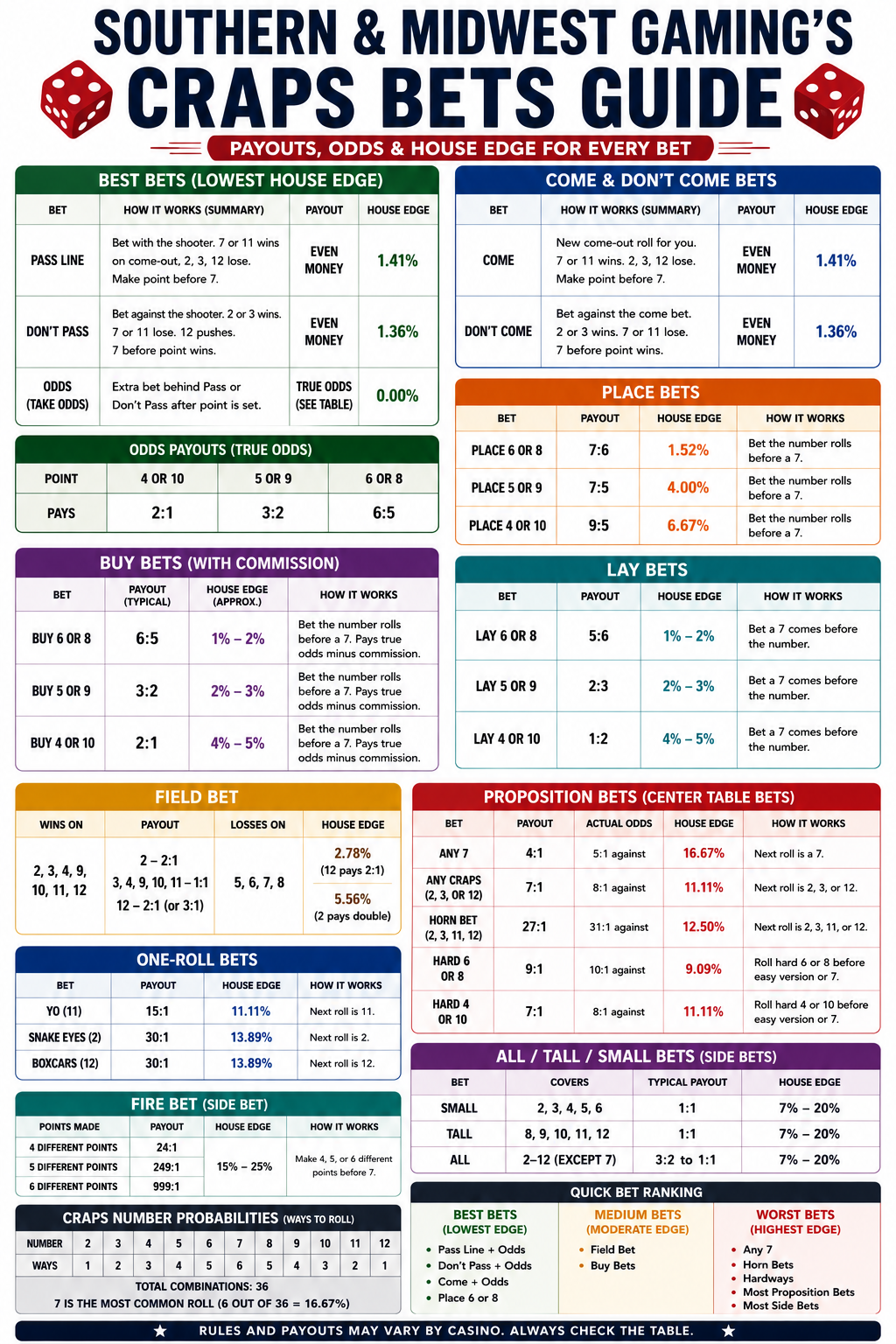
Craps Table Layout